
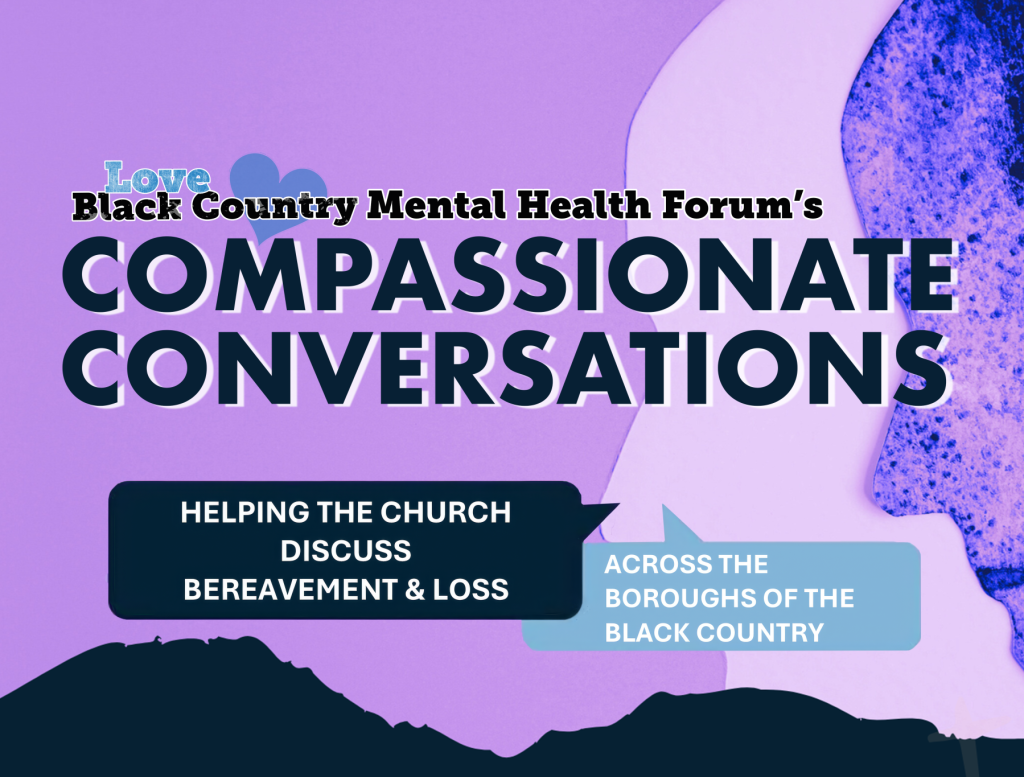
COMPASSIONATE CONVERSATIONS – A Regional Response to the Grief
In the post-industrial heart of the West Midlands, a different kind of infrastructure is being built. It isn’t made of brick or steel, but of “Compassionate Conversations.”
Across the Black Country churches are pivoting to address a modern plague: the mental health crisis. On May 9, the Love Black Country Mental Health Forum will host a critical event at LifeSpring Church, signalling a shift in how christian communities support people experiencing loss and grief.
A Shared Front Line
The upcoming session, “Helping the Church Discuss Bereavement and Loss,” is not just a seminar and more an expression of regional togetherness. By bringing leaders and volunteers from across the borough boundaries of Dudley, Sandwell, Walsall, and Wolverhampton, the forum is betting on a singular idea: that the church is uniquely positioned to catch those falling through the cracks of our society.
“We are looking at the emotional and spiritual impact of grief,” organisers noted, “exploring how prayer, faith, and hope can guide us as we care for others.”
The “Home” for the Hurting
The workshop comes as clinical waiting lists for mental health support continue to spiral. While medical intervention remains vital, the Love Black Country Mental Health Forum is asking a provocative question: What could happen if the local church became the ‘home’ for those navigating mental health issues?
Unlike a clinical appointment that ends after fifty minutes, a church community offers a 24/7 ecosystem of belonging. When the church functions as a home for the grieving, the “loneliness epidemic” meets its match in a community that refuses to look away.
Event Details
This gathering is a call to action for every church in the Black Country to become a sanctuary of informed, empathetic care. If you lead a church, work or volunteer in welcome or pastoral teams, or have a keen interest in mental health this event is for you.
-
Date: Saturday, 9 May 2026
-
Time: 9:00 AM – 1:00 PM (UTC+00)
-
Location: LifeSpring Church, 34 Clifton Street, Wolverhampton, WV3 0QT
-
Hosted by: Love Black Country Mental Health Forum
In a world that often demands a “stiff upper lip,” the churches of the Black Country are choosing a different path—one of shared burdens and open doors. If the church can truly become a home for the broken, the regional impact won’t just be felt in the pews, but perhaps in the very health of the community at large.